

DISCLAIMER and WARNING: The following content is not a substitute for vet visits and may be hard to watch as it contains images of a sick hedgehog.
Cancer can be pretty common health issue among hedgehogs, especially for the domesticated African pygmy variety. For the most part, the cancers that are more prevalent in hedgehogs are oral cancer, mammary cancer, stomach cancer etc.
It can be a very challenging journey especially if you don’t get the emotional, physical, and mental support from your family and friends. I have been very lucky to have a group of supportive family and friends that has helped me with the passing of my first hedgehog, Theo, to cancer. I understand not everyone was as lucky as I was, that being said, it hasn’t been an easy journey for me either. I’m hopeful however that the content of this blog can help provide you some sense of validation, relief, and comfort, as we experience the downside of pet parenthood or ownership.
When to Visit the Vet?
The only way to get a confirmation is to get a certified vet or exotic specialist that can see hedgehogs to confirm the diagnosis via biopsy, cytology, fine needle aspiration, urinalysis, or a combination of examinations and tests. From a pet owner’s perspective, you may find that the costs of all the tests and procedures may add up very quickly. However, I would still recommend following your vet’s suggestion as it is important to eliminate other possibilities before coming to the conclusion that your hedgehog has cancer.
The test results will also reveal any underlying symptoms that are not visible during a physical examination. It also provides a baseline for you and your vet to compare as your hedgehog’s health changes.
Don’t delay any longer, always follow your gut feeling. The earlier you can detect the potential concern, the easier it is to manage the possible outcome, and you will have more time be more prepared for the inevitable loss and heartbreak.


Second Vet Opinion?
If your gut feeling tells you that something is wrong with your first vet consult for whatever reason, look into getting a second consultation and examination with another vet. Again, this can be an accessibility issue as vets who are familiar with hedgehogs and exotic pets are not as common as vets who treat your canine and feline friends.
What If I don’t Have the Money?
If finance is a concern, check with your pet insurance or don’t be afraid to ask for help from friends and family, or find other ways to raise funds.
As a rule of thumb, always save whenever you can. Since pet insurance for hedgehogs are not available in Canada, I’ve resorted to saving a little bit every month, which is essentially my hedgehogs’ vet and emergency funds.
Having been to the vet a couple times for hedgehog cancer, the estimated expenditure can go up to the thousands in a few weeks.
For reference, I spent about $920 CAD for Theo’s cancer diagnosis, treatment, and cremation within one month (December 2020). As of November 2022, I have spent about $375 CAD in a span of ten weeks. I anticipate the total cost to be closer to $500 CAD, as Lou is still hanging in there and doing his best to fight the oral cancer symptoms. There is no set range as many of the procedural costs are standardized for dogs, cats, and pocket pets, but you may find that it is more expensive in cities compared to the suburban areas.
The Reality of Cancer Diagnosis
If you’re looking for a cure to cancer, I’m afraid to be the bearer of bad news as there is none at the moment. We don’t have a cure for cancers in hedgehog yet.
Yes, it is possible to surgically remove the cancerous tumour tissues, and your hedgehog may enter remission. However, there is a very likelihood of the cancer returning or spreading.
From a responsible pet parenthood’s perspective, you have a few options:
- palliative or hospice care
- surgical removal (if possible)
- euthanasia (when the quality of your hedgehog’s life is very poor and you have your vet’s support for this.)
I understand some pet parents may make the very difficult decision to rehome their hedgehog, and that’s okay and there is also no shame in that. From a hedgehog welfare’s perspective, it is better for the hedgehog to go to a home where they are able to care for their needs physically and financially full-time. It would be the responsible thing to disclose your hedgehog’s past and current health history with the owner, along with information from their previous veterinarian(s). It is possible to hide this information from potential adopters, but that would be unethical and it may be a challenge trying to provide the best care for them till the very end. I personally don’t think that’s very fair to the hedgehog especially, who has to adapt to a new environment and routine with a new person.
Cancer Symptoms in Hedgehog
Hedgehogs are very good at hiding their illnesses, as with all small prey animals. This list is not comprehensive, but it can give you a sense of what to look out for and when to bring them to the vet:
- Odd lump (could be soft or hard)
- Lack of appetite
- Lack of activity
- Slowing down
- Urinary issues
- Visibly annoyed and irritated when you touch the problem area
- Sleeping a lot (might be gradual)
- Throwing up
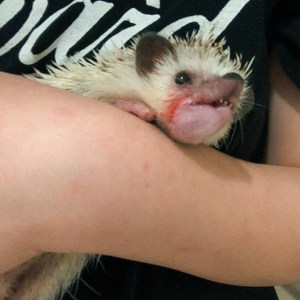
- Blood
GRAPHIC WARNING: The following image may be hard to watch for some as it contains blood.
References and Resources
If you are interested, here are some readings that might interest you and help you better understand what you might be getting into and how you can better identify the symptoms earlier.


 Adventurous Paws
Leave a reply to Benjamin Mitchell Cancel reply